
Meissner Machine Mastery #1: Lecture Notes
Why Understanding Mechanics Matters
My goal for this lesson is straightforward:
If you can develop even a basic grasp of sewing machine mechanics, it will pay dividends down the road.
Because eventually, every sewist runs into problems:
- Skipped stitches
- Bird’s nests
- Jams
- Broken needles
- Feeding issues
And when that happens, understanding what the machine is trying to do gives you a much better chance of solving the problem.
A Quick Word on My Background
Before we dive in, here’s a bit of context.
I’m fourth generation in the sewing machine business.
- My great grandfather Stepik Schoenberg operated a factory in Argentina manufacturing sewing machine parts for Husqvarna Viking.
- His son, my grandfather Ramon Schoenberg, was a mechanical engineer who eventually began manufacturing a machine called the MADEX.
- In 1963, Ramon immigrated to Berkeley, California, fixing sewing machines part-time and teaching his son Marty repair work from a young age.
- Marty grew up to run a traveling repair business out of a van, mostly servicing industrial machines.
- In the late 1980s, Marty recruited my dad, Dan, and together they started The Sewing Machine Shop — Marty fixing, Dan selling.
I began servicing machines myself around 2010, and since 2020 I’ve been doing it full time.

Sewing Machines Are In My Blood → Read full story
How Does a Sewing Machine Make a Stitch?
Let’s define the function of a sewing machine:
A sewing machine binds multiple layers of fabric together using thread.
It does this by automating the ancient process of sewing by hands:
- The needle pokes a hole through fabric
- A knot forms between the needle thread and bobbin thread
- That knot gets cinched tight into the fabric
- The fabric advances forward
- The machine repeats the cycle
But how does that knot actually form?
To answer that, we need to look inside the machine.

Sewing Machine Anatomy → Read full story
The Two-Shaft System
At its core, a sewing machine is built around two rotating shafts:
- The upper shaft
- The lower shaft
When you press the foot pedal:
- The motor runs
- The belt turns
- Both shafts rotate
- Every critical mechanism moves in sync
All stitch formation comes down to what’s attached to these two shafts.
The Upper Shaft
The upper shaft drives two major components:
The Needle Bar

The needle bar does exactly what you’d expect:
- Moves the needle down through the fabric
- Then pulls it back up
Down, up, down, up — over and over again.
But the needle alone does not make a stitch. That requires the second component…
The Take-Up Lever

The take-up lever is one of the most important parts of the machine.
You see it every time you thread: Your thread passes through the take-up lever eyelet before going down to the needle.
Its job is critical: The take-up lever pulls the stitch tight.
A stitch forms below the needle plate, but it becomes a real seam only when the take-up lever:
- swings upward
- pulls the knot up
- cinches it into the fabric
The Classic “Bird’s Nest” Problem

If you ever accidentally thread the machine but miss the take-up lever…
Something awful happens:
- The knot never gets tightened
- Loose loops pile up underneath
- You get the dreaded bird’s nest
So when you see looping underneath, the first thing to check is: Did the thread go through the take-up lever?
The Critical Nature of the Take-up Lever → Read full story
Upper Shaft Review
So far:
- The needle penetrates the fabric
- The needle thread forms a loop underneath
- The take-up lever tightens the knot into the seam
Now we move to the lower half of the machine…
The Lower Shaft
The lower shaft drives two critical mechanisms:
- The Hook Mechanism
- The Feed Mechanism
Let’s start with the hook.
The Hook Mechanism: Where the Stitch Is Born
The hook rotates around the bobbin and bobbin case. Its timing is unbelievably precise.
Here’s what happens:
- The needle goes down
- Then rises about 2–3 mm from its lowest point
- At that exact moment, a loop forms in the needle thread
- The hook passes behind the needle
- The hook point catches that loop
That loop-catching moment is the foundation of the stitch.

Once the hook catches the loop:
- It carries the needle thread around the bobbin case
- The needle thread lassos the bobbin thread
- A loose knot forms underneath
Then the take-up lever pulls it tight.
That’s the lockstitch.
Skipped Stitches (And Why They Happen)

Skipped stitches occur when:
The hook fails to catch the needle thread loop. No loop caught = no stitch formed.
Common causes include:
Hook Timing Problems
If the machine is “out of time,” the hook arrives:
- too early (too high above the needle high)
- or too late (too low beneath needle eye)
This often happens after a jam. Fixing timing requires a technician.
Sewing Machine Timing → Read full story
Needle-Hook Clearance Issues

The hook must pass extremely close to the needle:
- Close enough to catch the loop
- Not so close that it hits the needle
Skipped Stitches Troubleshooting Flow Chart → Read full story
Bent Needles (The #1 Cause)

In my experience, the most common cause of skipped stitches is simple: A slightly bent needle.
Even a small bend changes everything.
So if you get skipped stitches, the first thing to do is: Replace the needle.
A fresh needle solves more problems than people realize.
Troubleshooting 101: Change the Needle → Read full story
The Feed Mechanism
Once the stitch is tightened, the fabric must move forward. That’s the job of the feed dogs.
Feed timing matters:
- While the needle is in the fabric, feed dogs drop below the plate
- Once the needle exits, feed dogs rise
- Then they move forward by the stitch length setting
If stitch length = 3 mm, fabric advances 3 mm.
Needle Strikes and Feeding Errors

Feed timing problems often show up when:
- Sewing thick fabric
- Pushing or pulling fabric manually
- Doing free-motion work
If fabric moves while the needle is down:
- Needles bend
- Hook gets struck
- Burrs form
- Bobbin cases get damaged
What Causes Needle Strikes? → Read full story
Conclusion: The Stitch Is a Symphony
To summarize:
- The upper shaft drives the needle bar and take-up lever
- The lower shaft drives the hook and feed mechanism
- The hook catches the loop
- The threads form a knot
- The take-up lever tightens it
- The feed dogs advance the fabric
- The cycle repeats
That’s how a sewing machine makes a stitch.
Coming Soon in Future Lessons

There are many other critical topics I’ll cover in future posts, including:
- Needles and proper selection
- Thread quality
- Tension systems
- Bobbin winding
- Presser feet
- Needle plates
- Check springs
- Needle threaders
So stay tuned.
And if you watch the video, I hope it gives you a deeper appreciation for the brilliant mechanics happening beneath the covers every time you sew.

Meissner Machine Mastery #1: Lecture Notes

Written By: Cale Schoenberg
Find More Inspiration
Shop The Best Deals
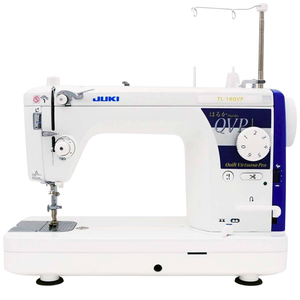
Juki Haruka TL-18QVP Sewing & Quilting Machine Juki Haruka TL-18QVP Sewing & Quilting Machine
Sewing & Quilting Machine
bernette B08 Straight Stitch Sewing Machine bernette B08 Straight Stitch Sewing Machine
Sewing & Quilting Machine
Juki TL-15 Quilting Machine Juki TL-15 Quilting Machine
Sewing & Quilting Machine
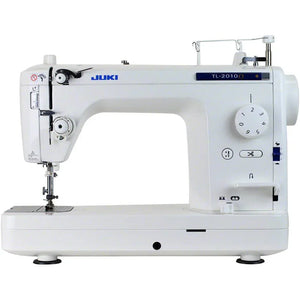
Juki TL-2010Q Sewing & Quilting Machine Juki TL-2010Q Sewing & Quilting Machine
Sewing & Quilting Machine
learning, machine guide
Share:
-
 Share on Email
Opens in a new window.
Share on Email
Opens in a new window.
-
 Share on Facebook
Opens in a new window.
Share on Facebook
Opens in a new window.
-
 Share on Linkedin
Opens in a new window.
Share on Linkedin
Opens in a new window.
-
 Tweet on Twitter
Opens in a new window.
Tweet on Twitter
Opens in a new window.






Leave a comment
Your email address will not be published. Required fields are marked *