
Sewing Knit Fabric & Differential Feed
Sewing machine & serger technology that allows sewists to sew knits garments like a professional
For those with the goal of sewing their own wardrobe, one of the biggest hurdles is sewing on knit fabrics — jersey, rib knit, interlock, sweatshirt fleece, spandex blends, etc.
They can be frustrating to sew on a standard sewing machine because knits are soft, flexible, and naturally stretchy. Common problems include puckering and skipped stitches, both of which are caused by using the incorrect needle type. However, there is also the problem of general distortion of the fabric, for knits will stretch out as they are fed through the sewing machine, meaning that stitches are made while the fabric is in that stretched-out state of being. After the fabric is fed through the machine and the fabric relaxes back to its normal form, we often see a wavy distortion of the fabric (seen in the photo below on stretchy fleece) that is undesirable.

How do we fix this problem?
The invention of the serger fixed this problem, but it may not be for the reason you think.
One of the main reasons sergers excel on knits is that they create an overlock stitch, which you think of as a stretch-compatible seam. Whereas a standard sewing machine makes a lockstitch— a strong stitch, but one with very little give— a serger’s overlock stitch naturally stretches with the fabric. This means your seams stay intact, whether you’re sewing T-shirts, leggings, swimsuits, or any other garment that needs to move with you.
How a serger makes a stitch:
With that said, an overlock stitch is NOT how we get rid of that undesirable wavy fabric distortion mentioned earlier. In order to solve this distortion problem, the engineers who designed these machines had to go one step further and invent a feature called DIFFERENTIAL FEED.
Differential feed is a feature on sergers that controls how the machine’s two sets of feed dogs (the gripped teeth underneath the presser foot that move the fabric) move in relation to each other. Unlike a regular sewing machine, a serger has front and back feed dogs that can move at different speeds. The sewiest has the ability to change the speed at which they move in relation to one another, depending on how your knit fabric is behaving while you sew. By adjusting their relationship, you can either prevent fabric from stretching and rippling or you can intentionally gather the fabric and shape it.

(Front & Back Feed Dogs on a Serger)
How to use Differential Feed
There is a knob/lever on the side of the serger that controls the machine’s differential feed ratio. When set at the neutral setting (1.0), the front and back feed dogs will move at the same rate of speed, so the fabric feeds evenly.

If we set our differential feed above 1.0 (e.g., 1.5—2.0), the front feed dogs will move faster than the back feed dogs. We would want to do this to correct fabric that is stretching/rippling/waving as we sew. Because the problem is caused by the fabric stretching out, the front feed dogs preemptively gather fabric before the stitch is made— that way, it’s no problem when the fabric inevitably stretches out because the front feed dogs move fast to gather extra fabric prior to the stretching.

If we set our differential feed below 1.0 (e.g., 0.7–0.5), the front feed dogs will move more slowly than the back feed dogs, which intentionally stretches out the fabric as we sew. Why would we ever want to stretch out the fabric like this? One reason is to create a stretched “lettuce edge” finish on hems if desired. It can also help eliminate fabric puckering on a certain class of fine fabrics that are super flexible and prone to being pushed down into the needle plate by the needle as we sew.

What Machines Possess Differential Feed?
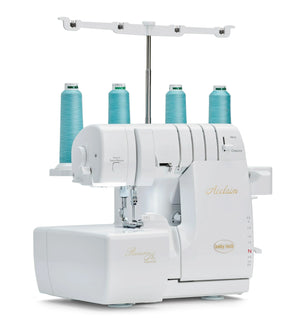
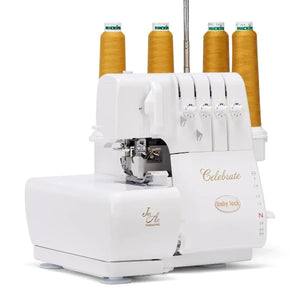
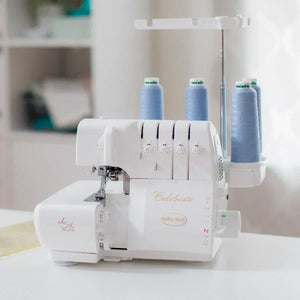
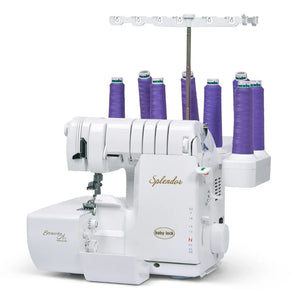
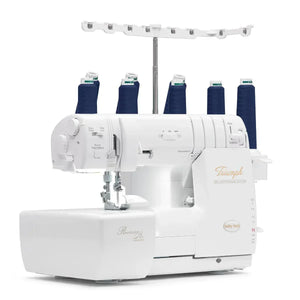
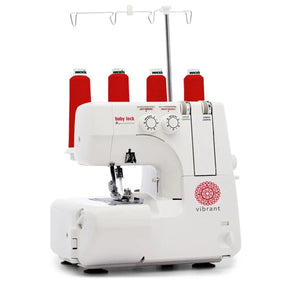
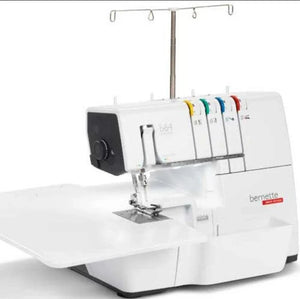
As far as I’m aware, all modern sergers possess the differential feed feature. That doesn’t mean they all work well. If you’ve been reading this newsletter for a while, then you know that I am a huge fan of Baby Lock sergers. The build quality of these sergers is second to none, from the design to the materials used. They are manufactured by hand in Baby Lock’s serger factory in Yamagata, Japan, and are as reliable as it gets.
|
|
|
|


A decade ago, differential feed did not exist on home sewing machines. This is no longer the case. Janome sewing machine, compatible with their AcuFeed Walking Foot have differential feed capability, though it works a little bit differently than sergers. Where sergers have two sets of walking feet below the needle plate, these Janome machines still only have one. However, a knob on the side of the machine allows the user to change how fast the gripped teeth on the walking foot feed the fabric, which essentially gives you differential feed capability.

(Janome’s AcuFeed Walking Foot)
My favorite Janome sewing machines compatible with the AcuFeed Walking Foot:
|
|
|
|
|
|
|
|
|
|
|
|


Sewing Knit Fabric & Differential Feed

Written By: Cale Schoenberg
Find More Inspiration
Shop The Best Deals


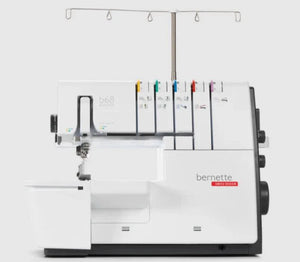
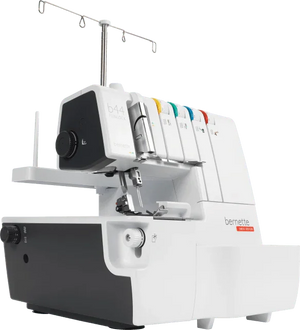
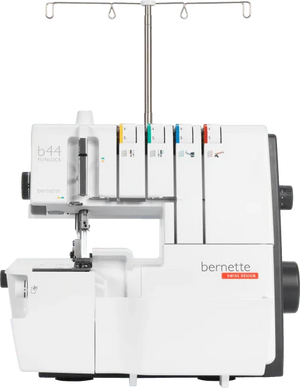
Máquina de esclusa de aire Bernette b64 Máquina de esclusa de aire Bernette b64
Serger


serger
Compartir en:
-
 Share on Email
Se abre en una nueva ventana.
Share on Email
Se abre en una nueva ventana.
-
 Compartir en Facebook
Se abre en una nueva ventana.
Compartir en Facebook
Se abre en una nueva ventana.
-
 Share on Linkedin
Se abre en una nueva ventana.
Share on Linkedin
Se abre en una nueva ventana.
-
 Twittear en Twitter
Se abre en una nueva ventana.
Twittear en Twitter
Se abre en una nueva ventana.


Deja un comentario
Tenga en cuenta que los comentarios deben aprobarse antes de que se publiquen.