
The Challenge of Repairing Vintage Sewing Machines
Sourcing old sewing machine parts, sewing machine repair, and sewing machine surgery.
Here at Meissner Sewing & Vacuum, we are proud of our team of talented sewing machine technicians. They have been factory trained on all the brands we sell– Bernina, Baby Lock, Janome, Juki, Brother, Viking, and Pfaff. Each individual technician has their strengths, and I feel confident that we can fix any machine that comes across the work bench.
Any machine.
That is something that will forever impress me.
We take in machines of all types, from all brands, from all eras. Juxtapose that with your average auto shop, which usually specializes in a few brands from a specific timeframe. You can’t take a BMW to just any auto shop for repair. The same goes for my 2001 Toyota Camry; not every shop will take it in.
Meanwhile, at our shop, we take in sewing machines, sergers, embroidery machines — you name it. We work on all brands: Bernina, Baby Lock, Brother, Janome, Juki, Viking, Pfaff, Singer, and more. We service both domestic and industrial machines, spanning hundreds of years: modern machines, mid-20th-century machines, and even the occasional pre-1900 relic.
We have the know-how to fix them all, and I am both proud and astonished by that fact.
Yet, with all that said, a sewing machine technician does face a major challenge when repairing older vintage machines: sourcing parts.

The Challenge of Sourcing Parts
It can be difficult to source parts for machines manufactured more than 20–25 years ago. If it’s a machine from the 1970s or 1980s (or older), that challenge increases tenfold.
Why is this the case?
Some brands simply don’t exist anymore, like Kenmore and White. Other brands still exist in name, but the ownership has changed multiple times over the past few decades. For example, many of the original European sewing machine manufacturers have been bought and sold over and over again, and the new owners often don’t support older generations of machines. They stop manufacturing common parts.
Even Bernina — which is still owned by the original founding family — only produces so many parts for their older machines. And to crystallize the problem: Bernina does not manufacture circuit boards for machines that came out 25+ years ago.
Here’s a concrete example that shows the challenge.
A Real Example
The other day, a young woman came into the store with a vintage White sewing machine manufactured sometime in the 1980s. She was excited because she found it at a thrift store or garage sale for very little money.
All she needed from us was the foot pedal/power cord.
Unfortunately, this machine took a foot pedal that’s fairly obscure. I went into the attic and sifted through our graveyard of sewing machines, but I couldn’t find what she needed. I even searched online by make and model, and still came up empty.
Even if we had found the right foot pedal, the machine itself wasn’t in good shape. I tried turning the handwheel, but it wouldn’t rotate more than 180 degrees, due to a bind somewhere inside. Even if she could find the foot pedal, the machine needed service, which would cost about $200, not including parts.
In this case, she was honestly better off buying the least expensive machine we sell: the Baby Lock Zest, which costs less than a full service. It’s simply a more reliable machine at this point, and it comes with:
- a full parts & labor warranty
- free classes on how to use it (which we offer in-store)
- easy access to presser feet, bobbins, accessories, and replacement parts

But let’s run a thought experiment: what if we serviced that White machine and needed parts? How would we source them?
Aftermarket Parts: Pros & Cons
In some cases, we can find an aftermarket part online. While it usually isn’t as high quality as a part made by the original manufacturer, it will often get the machine running again, though we’re not always confident in its longevity.
Even if we can find an aftermarket replacement, it still isn’t always wise to go through with the repair. The Singer Touch-n-Sew is a perfect example.
At least once a month, someone comes into the store with a Touch-n-Sew from the 1960s or 1970s. The complaint is almost always the same: the needle isn’t picking up the bobbin thread.
Nine times out of ten, we discover that the hook isn’t turning at all. We know this issue very well: it’s typically caused by a broken gear in the top half of the machine.
In this case, we can still get an aftermarket gear. However, we’ve decided that this is no longer a repair we will perform, even though we know how.
Why? We have two reasons.
First, it requires us to dissect the entire top half of the machine and rebuild it. It takes a long time to do properly, which means the customer ends up paying $500+ for the repair.
But even if the customer is willing to pay that, we still won’t do it because that broken gear is usually a sign of a larger problem.
These machines are more than 50 years old, and the internal components are brittle. That gear is often just the first of many parts that will break in the coming years. We know this because we’ve been burned by it multiple times.
There have been times when we begin disassembling a Touch-n-Sew to replace the gear, and another part breaks along the way — often cracking, but occasionally disintegrating in our fingers.
And sometimes we successfully replace the gear… only for the customer to return a few weeks later with an entirely different issue because another brittle part has failed.
You can see our dilemma and why we came to this decision.
Harvesting Parts from the Graveyard
If we can’t find an aftermarket replacement, we sometimes harvest parts from a dead machine in our sewing machine graveyard. Here’s a real example from a few years ago.
A woman came into our store with an old Elna SU manufactured in the 1950s. The machine’s motor had died, but because the machine was more than 50 years old, the original motor was no longer being manufactured.
She was in a tough spot. She absolutely loved the machine and didn’t want to replace it.
Our lead technician dug through the graveyard and found another Elna SU. That donor machine was inoperable because of a worn-out needle bar assembly, but the motor still worked perfectly.
He performed sewing machine surgery. He removed the dead motor from the customer’s Elna and replaced it with the working motor from the graveyard machine. While operating on the machine, he also noticed a few cracked gears that could cause problems soon. The donor machine’s gears weren’t cracked, so he swapped those in as well.
In the end, he essentially took two dead machines — one dead in the lower shaft, one dead in the upper shaft — and built one fully working machine.
He is the Dr. Frankenstein of sewing machine repair.

The Larger Point
Just because you can repair a vintage machine doesn’t mean it’s always wise to do so.
In that Elna SU case, the customer paid over $800 for the time and labor it took to repair the machine.
For $800, you can get a beautiful, modern Japanese-designed sewing machine that’s guaranteed to work for many years, and comes equipped with features you’ll use every time you sew:
- automatic thread trimming,
- automatic needle threader,
- automatic buttonhole,
- needle up/down,
- and more.
With that said, I do want to acknowledge something important, which is that sewing machines can be extraordinarily sentimental objects.
Part of the beauty of the sewing community is the intergenerational nature of sewing machines. Oftentimes, people entrust us with machines gifted by a parent as a graduation present, or by a spouse as an anniversary gift.
I understand why someone would feel strongly about repairing their vintage machine, but as someone who helps run a sewing machine service department, I also feel an obligation to share this as a kind of PSA so sewists understand the challenges we face when repairing older machines and can make informed decisions before investing time and money into repairs.

The Challenge of Repairing Vintage Sewing Machines

Written By: Cale Schoenberg
Find More Inspiration
Shop The Best Deals
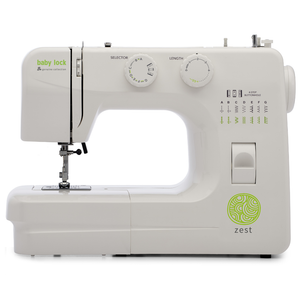

Máquina de coser Babylock Zest Máquina de coser Babylock Zest
Mechanical Sewing Machine
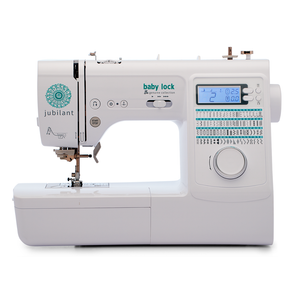
Máquina de coser Babylock Jubilant Máquina de coser Babylock Jubilant
Sewing Machine
machine guide, troubleshooting, vintage
Compartir en:
-
 Share on Email
Se abre en una nueva ventana.
Share on Email
Se abre en una nueva ventana.
-
 Compartir en Facebook
Se abre en una nueva ventana.
Compartir en Facebook
Se abre en una nueva ventana.
-
 Share on Linkedin
Se abre en una nueva ventana.
Share on Linkedin
Se abre en una nueva ventana.
-
 Twittear en Twitter
Se abre en una nueva ventana.
Twittear en Twitter
Se abre en una nueva ventana.
2 Comentarios
Judy
March 09, 2026
I found this information so interesting and helpful. new insight into why a machine can’t be repaired and not feeling like they are trying to just sell me a new machine and not repair my old one.
Deja un comentario
Tenga en cuenta que los comentarios deben aprobarse antes de que se publiquen.



Diane K
June 27, 2026
thank you for this well worded and well thought out article.