
What does a sewing machine technician do when he services your machine?
A peek behind the curtain of sewing machine repair

Meissner Sewing & Vacuum is proud to have a team of experienced in-house sewing machine technicians who have been factory trained on sewing machines, embroidery machines, and sergers from brands like Bernina, Janome, Baby Lock, Brother, Juki, Viking, Pfaff, and Singer.
People often wonder, what exactly does a technician do when he services a machine? The aim of this article is to bring transparency to this process.

When someone brings their machine to our store for service, it is usually because the machine has started to have a particular problem.
Common problems include:
- Poor stitch quality
- Skipped stitches
- Unusual sounds (squeaking, growling, etc.)
- Electronic issues (no power, error messages of some sort, etc.)
- Fabric feeds poorly
- Needle threader not working
Sewing machines are complex pieces of technology composed of hundreds of unique parts and components. Most adjustments performed have a direct effect on every other adjustment. That’s why one of the most important things a sewing machine technician must remember is to do his work in a precise sequence because one adjustment affects another. For example, you must always check and adjust feed timing before hook timing. Changing feed timing always changes hook timing but changing hook timing does not change feed timing.
There are basically two main categories of adjustments. They are the feeding system and the stitch-forming system. Then there are additional minor areas such as bobbin winding, needle threader, and electronic calibrations.
Here is a comprehensive checklist of the adjustments a Meissner sewing machine technician will perform when he services your sewing machine.

The Checklist:
1. Remove all external covers to expose all inner workings.
2. Disconnect key electrical connection and remove circuit boards as needed.
3. Clean machine with compressed air and remove all shredded or caught up thread.
4. Inspect for worn or broken parts.
5. Find loose parts and make them tight again (e.g. eliminate play in the take-up linkage, gear lash, etc.).
6. Lubricate machine with sewing machine oil.
Feed System Adjustments:
7. Motor belt tension
The motor belt connects the upper shaft to the lower shaft. We don’t want the belt loose and slipping, but we also don’t want the belt so tight that it is difficult for the machine to turn over.
8. Feed dog position in needle plate
We make sure the feed dogs are not rubbing against the needle plate; we check this by analyzing the feed dog movement with the stitch length set to its longest setting.
9. Timing of feed motion
As the needle enters the fabric, the feed dogs have finished feeding the fabric forward and dip below the needle plate. When the feed timing is askew, the feed dogs will still be feeding the fabric forward as the needle enters the fabric, which causes needle deflection that leads to skipped stitches, needle strikes on the needle plate, damaged bobbin case, and broken needles.
10. Feed dog height
Feed dogs can slowly lower down beneath the needle plate over time with lots of use; in turn, the fabric does not feed as well as we’d like it to, so our techs make sure the feed dog height is aggressive enough to adequately feed the fabric.
11. Synchronizer
On digital machines that use a synchronizer, we double check that the needle isn’t moving from right to left while it is in the fabric.
12. Presser foot alignment and height
Make sure the presser foot is properly aligned with the feed dogs and needle plate hole.
Stitch Forming Parts:
13. Position of needle in needle plate
Ensure needle position is centered in the needle plate hole - left to right and front to back
14. Hook to needle clearance
Critical setting and possibly the most common cause of skipped stitches: when the hook passes behind the needle down below the needle plate, it must pass behind the needle very close in distance – close, but not touching.
15. Hook timing
Time the machine so that the hook passes just above the eye of the needle when the needle has risen ~2-3mm above its bottom dead-center position.
16. Needle bar height
Make sure the needle bar hasn’t dropped too low or hasn’t been pushed up too high.
17. Bobbin case position finger or bracket
To ensure the bobbin case does not spin around with the hook.
Sew Off Adjustments:
18. Bobbin winder and Bobbin winder auto stop
19. Bobbin Case thread tension
20. Check spring travel
21. Top thread tension
22. Forward and reverse feeding (machine should feed forward the same as reverse)
23. Foot control speed calibration
There are probably 20 other secondary adjustments that I have not listed.
In addition to the checklist, a technician will address all of the customer’s particular issues that prompted them to come to us in the first place.

What does a sewing machine technician do when he services your machine?

Written By: Cale Schoenberg
Find More Inspiration
Shop The Best Deals
Baby Lock
Baby Lock Anthem Sewing & Quilting Machine Baby Lock Anthem Sewing & Quilting Machine
Sewing & Quilting Machine
Bernina
BERNINA 475QE Sewing & Quilting Machine BERNINA 475QE Sewing & Quilting Machine
Sewing & Quilting Machine
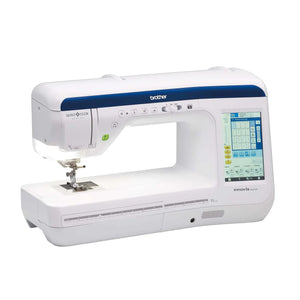

Brother
Brother Innov-is BQ3100 Sewing & Quilting Machine Brother Innov-is BQ3100 Sewing & Quilting Machine
Sewing & Quilting Machine


Brother
Brother Celeste CX1 Sewing & Quilting Machine w/ ISR Brother Celeste CX1 Sewing & Quilting Machine w...
Sewing & Quilting Machine
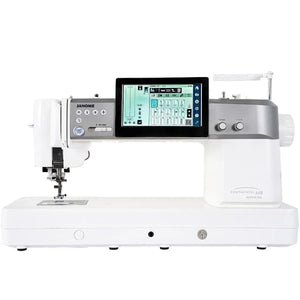
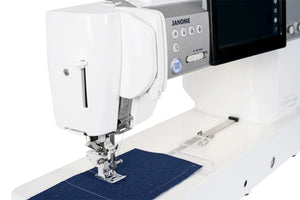
Janome
Janome Continental M8 Professional Sewing & Quilting Machine Janome Continental M8 Professional Sewing & Qui...
Sewing & Quilting Machine
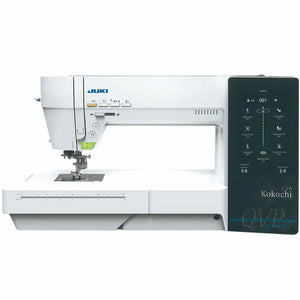
JUKI
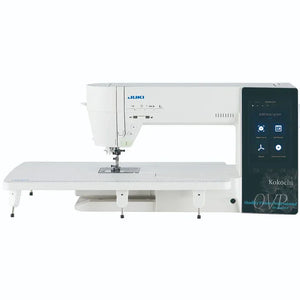
Juki Kokochi DX-4000QVP Sewing & Quilting Machine Juki Kokochi DX-4000QVP Sewing & Quilting Machine
Sewing & Quilting Machine
repair, troubleshooting
Share:
-
 Share on Email
Opens in a new window.
Share on Email
Opens in a new window.
-
 Share on Facebook
Opens in a new window.
Share on Facebook
Opens in a new window.
-
 Share on Linkedin
Opens in a new window.
Share on Linkedin
Opens in a new window.
-
 Tweet on Twitter
Opens in a new window.
Tweet on Twitter
Opens in a new window.
1 Comments
Leave a comment
Your email address will not be published. Required fields are marked *




Teri English
March 16, 2026
best post ever!! thank you Carl!